

GLP-1 Receptor Agonist Drugs: The Full Class Guide (How They Work & What Sets Each Apart)
Same receptor. Very different results.
| Stat | Value |
|---|---|
| Average weight loss with tirzepatide at 72 weeks (SURMOUNT-1) | 22.5% |
| Average weight loss with semaglutide 2.4mg at 68 weeks (STEP 1) | 15% |
| Average weight loss with liraglutide 3mg at 56 weeks (SCALE) | ~8% |
| Distinct subcategories within the GLP-1 RA drug class | 4+ |
Key Takeaways
- Not interchangeable: All GLP-1 RAs activate the same receptor, but short-acting vs. long-acting, single vs. dual agonist, and injection vs. pill produce meaningfully different clinical outcomes.
- Long-acting = more weight loss: Continuous receptor activation affects brain appetite centers; pulsed short-acting drugs mainly lower post-meal glucose.
- Tirzepatide leads on weight: Adding GIP agonism pushes weight loss ~7–8 percentage points beyond semaglutide 2.4mg.
- Oral options now exist: Orforglipron requires no fasting; Wegovy pill (oral semaglutide 50mg) requires 30-minute pre-dose fast.
- Switching requires care: Different drugs have different titration schedules, dosing intervals, and side effect windows — transitions should be managed clinically.
Knowing which GLP-1 receptor agonist category fits your situation — not just that one of them exists — is what determines whether you get 8% weight loss or 22%. The difference between those outcomes is the same class of drug, aimed at the same receptor, built on different structural strategies. This guide maps the whole landscape so the distinctions are clear.
What defines a GLP-1 receptor agonist
The GLP-1 receptor (GLP-1R) is expressed throughout the body — in pancreatic beta cells, the gut, the heart, and critically, the hypothalamus and brainstem. GLP-1 itself is a 30-amino-acid peptide hormone released from intestinal L-cells after eating. It does three things simultaneously: it tells beta cells to release insulin proportionally to blood glucose, it slows stomach emptying, and it signals the brain that food has been received. Natural GLP-1 lasts about two minutes before the enzyme DPP-4 breaks it down.
GLP-1 receptor agonists are molecules — peptide-based or small molecule — that bind to GLP-1R and activate it, mimicking or amplifying that natural signal. The difference is that engineered GLP-1 RAs are built to resist DPP-4 degradation, giving them half-lives ranging from hours to a full week. That extended receptor engagement is what makes them therapeutically useful. The longer the activation window, the more profound the effects on appetite and weight — a key fact when comparing subcategories.
Short-acting GLP-1 RAs: the first generation
Short-acting GLP-1 RAs hit their peak effect within a few hours and are cleared quickly. The two main examples are exenatide twice-daily (Byetta) and lixisenatide once-daily (Adlyxin). Because they produce a pronounced peak and then clear, their dominant clinical effect is reducing post-meal blood glucose spikes rather than sustained appetite suppression. They are typically dosed before the main meal of the day.
Short-acting agents produce modest weight loss — typically 1–3 kg above placebo in trials — because their effect on the appetite centers of the brain is intermittent rather than continuous. The nausea window is also time-limited: it tends to appear within hours of the dose and resolve before the next one. For patients with primarily post-meal glucose control needs and lower weight-loss priority, this profile can be acceptable. But for obesity as a primary indication, short-acting GLP-1 RAs are no longer considered optimal given the alternatives now available.
Long-acting GLP-1 RAs: where weight loss happens
Long-acting GLP-1 RAs maintain persistent receptor activation — measured in days rather than hours. This sustained signal is what drives clinically meaningful weight loss. The mechanism is straightforward: continuous GLP-1R activation in the hypothalamus and brainstem durably suppresses appetite, slows gastric emptying around the clock, and reduces caloric intake over weeks and months, not just around meal times.
The approved long-acting agents are:
-
Liraglutide (Victoza/Saxenda): Daily subcutaneous injection; half-life ~13 hours. Weight loss ~8% at 56 weeks for the 3mg obesity dose (SCALE trial).
-
Dulaglutide (Trulicity): Weekly subcutaneous injection; half-life ~5 days. Primary T2D indication; weight loss ~3–5 kg in trials — lower than dedicated obesity agents.
-
Semaglutide (Ozempic/Wegovy): Weekly subcutaneous injection; half-life ~7 days. Weight loss 15% at 68 weeks for the 2.4mg obesity dose (STEP 1 trial). The current benchmark for single-receptor GLP-1 RAs.
The pattern is clear: longer half-life correlates with more sustained receptor activation, which correlates with greater weight loss. Semaglutide's ~7-day half-life is meaningfully longer than liraglutide's ~13-hour half-life, and the weight loss numbers reflect that difference almost exactly.
Oral GLP-1 RAs: convenience at a cost
The peptide structure of GLP-1 analogues creates an absorption problem: amino acid chains are digested in the stomach before they reach systemic circulation. Two different engineering approaches have solved this, imperfectly but well enough for clinical use.
Oral semaglutide (Rybelsus for diabetes; Wegovy 50mg pill for obesity): Uses SNAC (sodium N-[8-(2-hydroxybenzoyl)amino]caprylate) technology — a carrier molecule that temporarily permeabilizes the stomach lining to allow semaglutide absorption. Bioavailability is approximately 1% vs. roughly 89% for the subcutaneous version. The OASIS 1 trial showed ~15% weight loss at 68 weeks with the 50mg obesity dose, comparable to injectable Wegovy when dosing conditions are met. The catch: strict 30-minute fasting before the dose and ingestion with no more than 120mL of water are required. Noncompliance drops bioavailability sharply.
Orforglipron (Foundayo, Eli Lilly): A non-peptide small molecule, so it has no digestion problem at all. It can be taken with or without food and needs no special delivery technology. Phase 3 data showed ~14.7% weight loss at 36 weeks — a strong result for an oral agent, and with potentially fewer compliance constraints than the Wegovy pill. No fasting requirement is a material quality-of-life advantage for many people.
Multi-receptor agonists: beyond GLP-1 alone
Tirzepatide (Mounjaro for T2D; Zepbound for obesity) activates both GLP-1R and GIPR (the GIP receptor). GIP (glucose-dependent insulinotropic polypeptide) is another incretin hormone with complementary effects on fat storage, adipocyte function, and possibly central appetite regulation. The additive or synergistic interaction between GLP-1 and GIP activation produces weight loss that exceeds what GLP-1 agonism alone achieves. SURMOUNT-1 (tirzepatide 15mg) showed 22.5% average body weight loss at 72 weeks. That is approximately 7–8 percentage points above semaglutide 2.4mg at comparable time points — a difference large enough to be clinically significant.
Retatrutide, currently in Phase 3 trials, adds glucagon receptor agonism to the GLP-1 + GIP combination. Phase 2 data showed 24.2% weight loss at 48 weeks. The glucagon receptor component increases energy expenditure and fat oxidation on top of the appetite suppression from GLP-1 and GIP activation. If Phase 3 confirms Phase 2, it would represent another step up in efficacy from tirzepatide.
How this compares to compounded semaglutide
Compounded semaglutide followed a parallel but separate path: its own enforcement timeline differed from tirzepatide's because semaglutide came off the FDA shortage list on a different schedule. The FDA has separately warned that salt forms of semaglutide should not be used in compounding, and the period of enforcement discretion for semaglutide compounding ended on its own dates rather than tirzepatide's (FDA). Compounded semaglutide is not the same as FDA-approved Wegovy or Ozempic.
Common side effects of tirzepatide
The most common adverse reactions reported in at least 5% of patients on tirzepatide (Zepbound) are gastrointestinal: nausea, diarrhea, vomiting, constipation, and abdominal pain, among others (DailyMed Zepbound label). Reduced appetite is also expected and is part of how the drug works, separate from these labeled side effects.
Why people turn to compounded tirzepatide: cost and access
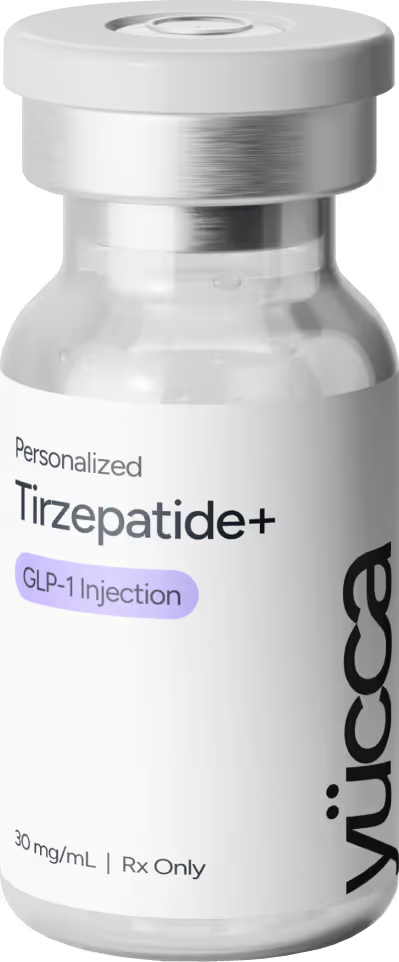
The main reasons people sought compounded tirzepatide were cost and access: brand Mounjaro and Zepbound carry high list prices, and uninsured or underinsured patients often could not get them covered. During the shortage, telehealth platforms became a common channel for obtaining compounded versions. None of this changes the regulatory caveat above, that compounded tirzepatide is not FDA-approved and is not reviewed for safety, effectiveness, or quality (FDA).
Safety and quality concerns with compounded injectables
Because tirzepatide is injected, sterility and accurate dosing matter, and the FDA has flagged specific problems with compounded GLP-1 products. The agency has received reports of adverse events, some requiring hospitalization, that may relate to dosing errors with compounded injectable products, and complaints that some compounded GLP-1 drugs arrived warm or with inadequate ice packs to keep them at recommended storage temperatures (FDA). Discuss any compounded injectable with your care team before using it.
Compounded vs. brand-name tirzepatide: oversight, cost, and what changed
The central difference is oversight. Brand-name Mounjaro and Zepbound are FDA-approved and manufactured under the agency's review for safety, effectiveness, and quality; compounded tirzepatide is not FDA-approved and is not reviewed in that way before it is sold (FDA). Compounded versions cannot be assumed to be therapeutically equivalent to or safer than the brand product, and the legal basis for large-scale compounding narrowed after tirzepatide came off the shortage list.
How compounding pharmacies are regulated: 503A vs 503B
A 503A compounding pharmacy is a state-licensed pharmacy (or physician) that compounds a drug for an individual patient based on a prescription. A 503B outsourcing facility is registered with the FDA, can compound in larger batches, and is expected to follow current good manufacturing practice; outsourcing facilities are also restricted from compounding with bulk drug substances unless the substance is on the FDA's 503B bulks list or is a drug on the shortage list (FDA). Neither category produces an FDA-approved product.
What actually happened: the FDA shortage list and the end of mass compounding
Tirzepatide was added to the FDA drug shortage list, which is the condition that legally allowed state-licensed pharmacies and outsourcing facilities to compound it at scale. Once the FDA determined the shortage was resolved, that allowance wound down: the agency said it did not intend to act on violations tied to the shortage listing until February 18, 2025 for state-licensed pharmacies compounding under section 503A, and until March 19, 2025 for 503B outsourcing facilities (FDA). Compounders generally may not make products that are essentially copies of an FDA-approved drug once a shortage ends.
What compounded tirzepatide is (and how it differs from Mounjaro and Zepbound)
Compounded tirzepatide is tirzepatide prepared by a pharmacy from active ingredient rather than the brand-name product made by Eli Lilly. Mounjaro and Zepbound are the only FDA-approved tirzepatide products; compounded versions are not FDA-approved, which means they do not undergo the agency's review for safety, effectiveness, and quality before they are marketed (FDA). A compounded preparation should not be assumed to be equivalent to the brand product.
Full comparison table
| Drug (INN) | Brand | Route | Frequency | Main Indication | Weight Loss | Key Trial | Subcategory |
|---|---|---|---|---|---|---|---|
| Exenatide | Byetta | Subcutaneous | Twice daily | T2D | ~2–3 kg | DURATION series | Short-acting |
| Lixisenatide | Adlyxin | Subcutaneous | Once daily | T2D | ~1–2 kg | GetGoal series | Short-acting |
| Liraglutide | Saxenda (3mg); Victoza (1.8mg) | Subcutaneous | Once daily | Obesity / T2D | ~8% at 56 wks | SCALE | Long-acting |
| Dulaglutide | Trulicity | Subcutaneous | Once weekly | T2D | ~3–5 kg | AWARD series | Long-acting |
| Semaglutide | Ozempic (1mg); Wegovy (2.4mg); Rybelsus/Wegovy pill | Subcutaneous / Oral | Weekly (inj); Daily (oral) | T2D / Obesity | ~15% at 68 wks | STEP 1 / OASIS 1 | Long-acting / Oral |
| Tirzepatide | Mounjaro / Zepbound | Subcutaneous | Once weekly | T2D / Obesity | 22.5% at 72 wks | SURMOUNT-1 | Dual agonist (GLP-1+GIP) |
| Orforglipron | Foundayo | Oral | Once daily | Obesity / T2D | ~14.7% at 36 wks | Phase 3 | Non-peptide oral |
| Retatrutide | (Pipeline) | Subcutaneous | Once weekly | Obesity | 24.2% at 48 wks (Ph2) | Phase 2 / Phase 3 ongoing | Triple agonist (GLP-1+GIP+GCG) |
How to think about switching within the class
Switching from one GLP-1 RA to another is not equivalent to switching between brands of the same drug. Each agent has a different titration schedule, a different dosing interval, and a different side effect window. Moving from liraglutide (daily peak-and-trough dosing) to semaglutide (weekly sustained-exposure dosing) typically requires restarting at the lowest semaglutide dose rather than dose-matching, because the pharmacokinetic profiles are different enough that a straight swap risks amplified nausea. The same applies when stepping up to tirzepatide: it activates an additional receptor pathway, and the body needs time to adjust to the combined GLP-1/GIP signal.
What "switching" does offer is a real option if one agent fails due to tolerability or insufficient efficacy. A patient who experienced severe nausea on semaglutide may tolerate a different titration schedule or pharmacokinetic profile better on another agent — though the mechanisms of side effects are similar enough across the class that this is not guaranteed.
One honest limitation of this entire class: GLP-1 receptor agonists work while you take them. When discontinued, average weight regain in STEP 4 was about two-thirds of lost weight within one year. This is not a personal failure — it reflects that GLP-1 RA therapy alters active hormone signaling, and stopping the drug removes that signal. Long-term treatment is the model that produces durable results.
Who each subcategory fits best
Short-acting agents (exenatide, lixisenatide) fit patients whose primary need is post-meal glucose control in type 2 diabetes and for whom cost or availability makes newer agents inaccessible. Long-acting single-receptor agents (liraglutide, semaglutide) cover the full range from type 2 diabetes management through chronic weight management — semaglutide especially, given its 15% weight loss ceiling and strong cardiovascular outcomes data from SUSTAIN-6 and SELECT. Dual-receptor tirzepatide fits patients with obesity as a primary indication who need the most weight loss available from an approved injectable, or type 2 diabetes patients who need both glucose control and significant weight reduction. Oral agents fit people who are needle-averse or for whom injection logistics are a genuine barrier — orforglipron especially, given its no-fasting requirement.
Frequently Asked Questions
Are all GLP-1 receptor agonists approved for weight loss?
No. Only specific agents and doses carry an obesity (chronic weight management) indication from the FDA. Semaglutide 2.4mg (Wegovy), liraglutide 3mg (Saxenda), tirzepatide (Zepbound), and orforglipron (Foundayo) have obesity approvals. Ozempic (semaglutide 1mg) and Mounjaro (tirzepatide) are approved for type 2 diabetes — though the same molecules are used.
Why does tirzepatide produce more weight loss than semaglutide?
Tirzepatide adds GIP receptor agonism to GLP-1 receptor agonism. The GIP receptor influences fat cell function and may have additional central appetite effects. The combined GLP-1 + GIP signal produces weight loss roughly 7–8 percentage points higher than semaglutide 2.4mg in head-to-head comparisons (SURMOUNT-5).
Can you take two GLP-1 RAs at the same time?
No. Combining two agents that act on the same receptor provides no additional benefit and significantly increases the risk of side effects. You use one at a time.
Is orforglipron as effective as semaglutide?
Phase 3 data shows ~14.7% weight loss at 36 weeks for orforglipron — comparable to semaglutide's ~15% at 68 weeks, though direct head-to-head comparisons at matched time points are still limited. The key advantage of orforglipron is oral delivery without fasting requirements.
Do GLP-1 RAs have cardiovascular benefits beyond weight loss?
Yes. Semaglutide 2.4mg showed a 20% reduction in major adverse cardiovascular events (MACE) in the SELECT trial in people with cardiovascular disease but without diabetes. Liraglutide showed a 13% MACE reduction in the LEADER trial. These effects appear to be partially independent of the weight loss produced.
This article is for informational purposes only and does not constitute medical advice. Consult a qualified healthcare provider before starting any medication.