

Best Time to Inject Retatrutide: Morning or Night?
Direct answer: Evening injection is the most practical choice for most people. You sleep through the peak nausea window — roughly the first 12–24 hours — and wake up with appetite suppression already active. That said, morning works too; the 6-day half-life makes timing flexible as long as you're consistent week to week.
People who titrated retatrutide too fast dropped out of clinical trials at nearly double the rate of those who went slow. The drug works — Phase 3 data showed 28.7% body weight loss over 68 weeks — but the protocol you follow matters as much as the molecule itself.
Key Takeaways
- The best time to inject retatrutide is evening for most people — nausea peaks overnight
- Starting dose is 2mg once weekly — do not jump straight to therapeutic levels
- Increase every 4 weeks only if the current dose is well tolerated
- Inject the same day and same approximate time each week
- Rotate between abdomen, thighs, and upper arms; never the same spot twice in a row
- If you miss a shot by fewer than 5 days, take it immediately; if more than 5 days have passed, skip it
- 8mg is a common sweet spot — more isn't always better
The titration schedule below reflects Phase 2 and 3 clinical trial protocols, not invented numbers. Bodies differ. Some people find 6mg sufficient; others push to 12mg. The schedule gives you the framework — your experience fills in the rest.
When Is the Best Time to Inject Retatrutide Morning or Night?
The question of best time to inject retatrutide morning or night comes up constantly, and most dosing guides skip it entirely. Here is the practical answer.
Evening Injection (Recommended)
Inject after dinner, roughly 7–10 pm. You sleep through the worst of the nausea window. By morning, appetite suppression is already active and the sharpest side effect period has passed while you were unconscious.
Best for: People who experience nausea in the first 12–24 hours post-injection; anyone who wants to keep side effects from affecting work or daytime activity.
Morning Injection (Before Food)
Inject in the morning before breakfast. Appetite suppression is in effect during your highest-calorie hours. The trade-off: if nausea hits, it hits during your active day.
Best for: People who have no nausea issues and want maximum appetite control at breakfast and lunch.
The Bottom Line on Timing
Try evening on your first injection. If you sleep fine and wake up feeling okay, stay with it. If you experience insomnia or vivid dreams post-injection — rare but reported — switch to morning.
Key rule: Same approximate time each week. The 6-day half-life is forgiving, but staying within a 2–3 hour window each week is good practice.
Best Time to Take Retatrutide
"Take" and "inject" are the same action with retatrutide — it's a once-weekly subcutaneous injection, not an oral medication. Whichever phrasing you used to search, the answer is the same: the best time to take retatrutide is in the evening, on a consistent day of the week, on a roughly empty stomach, with the vial brought to room temperature first.
Best Time of Day to Take Retatrutide
Evening dosing wins for most users for three reasons:
- Peak nausea passes while you sleep. Retatrutide's GI side effects peak roughly 12–24 hours after injection. Evening dosing puts that window in your sleep cycle instead of your workday.
- Appetite suppression is active by your next breakfast. The body's response to the dose is well-established by morning, so the first meal of the day is easier to portion correctly.
- Empty-stomach dosing is easier in the evening. Most people can dose 2–3 hours after dinner before bed; doing the same in the morning means injecting before breakfast on weekdays, which gets skipped more often.
Morning works too — the 6-day half-life makes timing flexible. What matters more than morning vs evening is consistency: same day, same general time window, every week.
Best Time to Take Retatrutide Relative to Food
Retatrutide does not require fasted injection. But anecdotally, side effects are lighter if you dose:
- At least 2 hours after a meal (stomach is closer to empty)
- Not immediately before a large high-fat meal (compounds nausea)
- With normal hydration (deliberate water intake during the dose week reduces side effects)
If your schedule only allows post-meal dosing, dose anyway. Consistency beats fasting status.
Best Time to Take Retatrutide on Travel Weeks
Shift the dose by up to 48 hours in either direction to fit your trip without restarting the schedule. Don't let a vacation push you into double-dosing or skipping a dose entirely.
What Day of the Week Should You Inject?
Day selection affects your lived experience with the drug, not just blood levels.
The Case for Mid-Week (Tuesday–Thursday)
The first 24–36 hours after injection tend to be the roughest — nausea, reduced appetite, possible fatigue. Injecting Wednesday or Thursday evening means the worst of the side effect window falls over the weekend, when your schedule is more flexible.
Consistency Beats Optimization
Whatever day you will actually remember and follow through on is the right day. The 6-day half-life is forgiving enough that Tuesday versus Thursday won't meaningfully affect blood levels. Clinical trials simply required a fixed weekly day — they did not specify which one.
What Is the Retatrutide Dosing Schedule?
Retatrutide is a once-weekly subcutaneous injection with a tiered escalation protocol that typically spans 12–20 weeks before reaching a maintenance dose.
The reason for the slow ramp-up: retatrutide activates three receptor systems simultaneously — GLP-1, GIP, and glucagon. Stack them at full dose from day one and the GI side effects can be severe enough to cause discontinuation. Start low, titrate slow, and most people tolerate it well.
Standard Titration Protocol
| Phase | Weeks | Weekly Dose | Primary Goal |
|---|---|---|---|
| Initiation | 1–4 | 2mg | Assess tolerance, establish routine |
| Escalation 1 | 5–8 | 4mg | First therapeutic effect |
| Escalation 2 | 9–12 | 8mg | Full therapeutic range |
| Maintenance | 13+ | 12mg | Maximum dose (if needed) |
Source: Phase 2 obesity trial, NEJM 2023 (Eli Lilly TRIUMPH program)
Keep in mind that retatrutide is investigational. It has been studied in clinical trials but is not FDA-approved, so the doses below come from trial protocols rather than an approved product label. (FDA: clinical research stage)
Conservative Protocol (1mg Start)
Some people — especially those sensitive to GI side effects, or who have had rough experiences with semaglutide or tirzepatide — choose to start lower. This is not from clinical trials but is used in community practice.
| Weeks | Dose | Notes |
|---|---|---|
| 1–4 | 1mg | Very low start — mainly habit building |
| 5–8 | 2mg | Matches standard start dose |
| 9–12 | 4mg | First escalation |
| 13–16 | 8mg | Therapeutic range |
| 17+ | 12mg | If needed |
If you have tolerated other GLP-1s fine before, the standard 2mg start is probably sufficient. The 1mg approach adds four weeks before real appetite suppression kicks in — worth it for some, unnecessary for others.
This titration schedule reflects the protocols studied in retatrutide's obesity and weight-management trials, where the drug was tested in adults for weight loss rather than approved for it. (Phase 2 obesity trial, NEJM 2023)
Retatrutide Starting Dose: What to Expect in Week One
The starting dose of retatrutide is 2mg. You will almost certainly not lose much weight that first week. That is expected — it is the protocol working as intended.
What Week 1 Actually Feels Like
Most people notice appetite reduction within 2–4 days. You might feel mildly off after the first injection — some nausea, fatigue, or a metallic taste. That usually passes within 24–48 hours.
What Not to Do
- Do not push through severe nausea by eating — it makes it worse
- Do not skip meals entirely — low blood sugar amplifies side effects
- Do not decide at week 2 that it is "not working" — therapeutic effects begin at 4mg
When to Escalate From 2mg
Move to 4mg after week 4 only if:
- No persistent nausea lasting more than 3 days post-injection
- No vomiting
- No severe injection site reactions
- You feel ready to increase
If week 4 was rough, stay at 2mg for another 4 weeks. There is no advantage in escalating early.
Retatrutide Dosing Chart: Full Week-by-Week Breakdown
For the complete visual chart with reconstitution volumes, see the retatrutide dosage chart. Below is the expanded protocol with practical guidance for each phase.
Phase 1: Weeks 1–4 (2mg)
Focus: Routine. Pick your day, stick to it. Track how you feel after each injection.
Weight loss expectation: Minimal — 0 to 3 lbs. Do not judge the drug here.
Side effects: Usually mild. Slight appetite reduction, possible brief nausea.
Tip: Eat a small, bland meal before injecting if you are nausea-prone. High-fat meals and alcohol in the 4 hours after injection increase GI side effects.
Phase 2: Weeks 5–8 (4mg)
Focus: Real appetite suppression begins. Meals feel heavy faster. You may not finish your plate.
Weight loss expectation: 3–6 lbs over 4 weeks.
Side effects: GI side effects often peak here, then settle. If nausea is unmanageable at week 6, hold at 4mg for 2 more weeks before escalating.
A Note on GI Effects as Doses Climb
The gastrointestinal effects that tend to peak during escalation include not only nausea, vomiting, and diarrhea but also constipation, which was among the reported GI adverse events in the Phase 2 retatrutide obesity trial. Like the other GI effects, it was most common during dose escalation. (NEJM 2023 GI data)
Phase 3: Weeks 9–12 (8mg)
Focus: The sweet spot for many people. Phase 2 data: 8mg produced 22.8% weight loss at 48 weeks versus 24.2% for 12mg — meaningful but not dramatic.
Weight loss expectation: Accelerating. Most people are visibly leaner by week 12.
Side effects: Often improving from the week 5–8 peak. The body has largely adjusted.
Decision point: If you are losing weight steadily and tolerating 8mg well, you may never need 12mg. There is no requirement to reach maximum dose.
Phase 4: Week 13+ (12mg)
Who needs this: People who have plateaued at 8mg, or whose goals require maximum efficacy.
What to expect: Continued weight loss. GI side effects may flare briefly, then stabilize.
Note: Some people report 12mg is barely different from 8mg. Others see a clear bump. Individual variation is real.
Injection Site Rotation
Injection site rotation prevents scar tissue buildup, which can impair absorption over time. Nodules from repeated injections at the same spot reduce bioavailability.
Approved Injection Sites
- Abdomen: 2 inches away from the navel. Most absorption data comes from this site.
- Thighs: Upper outer thigh; avoid the inner thigh.
- Upper arms: Outer surface; typically requires careful technique or a second person.
Rotation Schedule
| Week | Injection Site |
|---|---|
| Week 1 | Abdomen — right side |
| Week 2 | Abdomen — left side |
| Week 3 | Right thigh |
| Week 4 | Left thigh |
| Week 5 | Back to abdomen — right side |
Within each site, move around. The abdomen has substantial real estate. Aim to stay at least an inch from your last injection mark.
How to Track Your Dosing Schedule
Consistent tracking helps you understand your own response to the drug, not just the schedule.
What to Track
- Injection date and time
- Dose administered
- Site used
- Side effects, rated 1–5
- Weight (weekly, same time of day)
- Appetite/hunger rating (1–10)
Tracking Tools
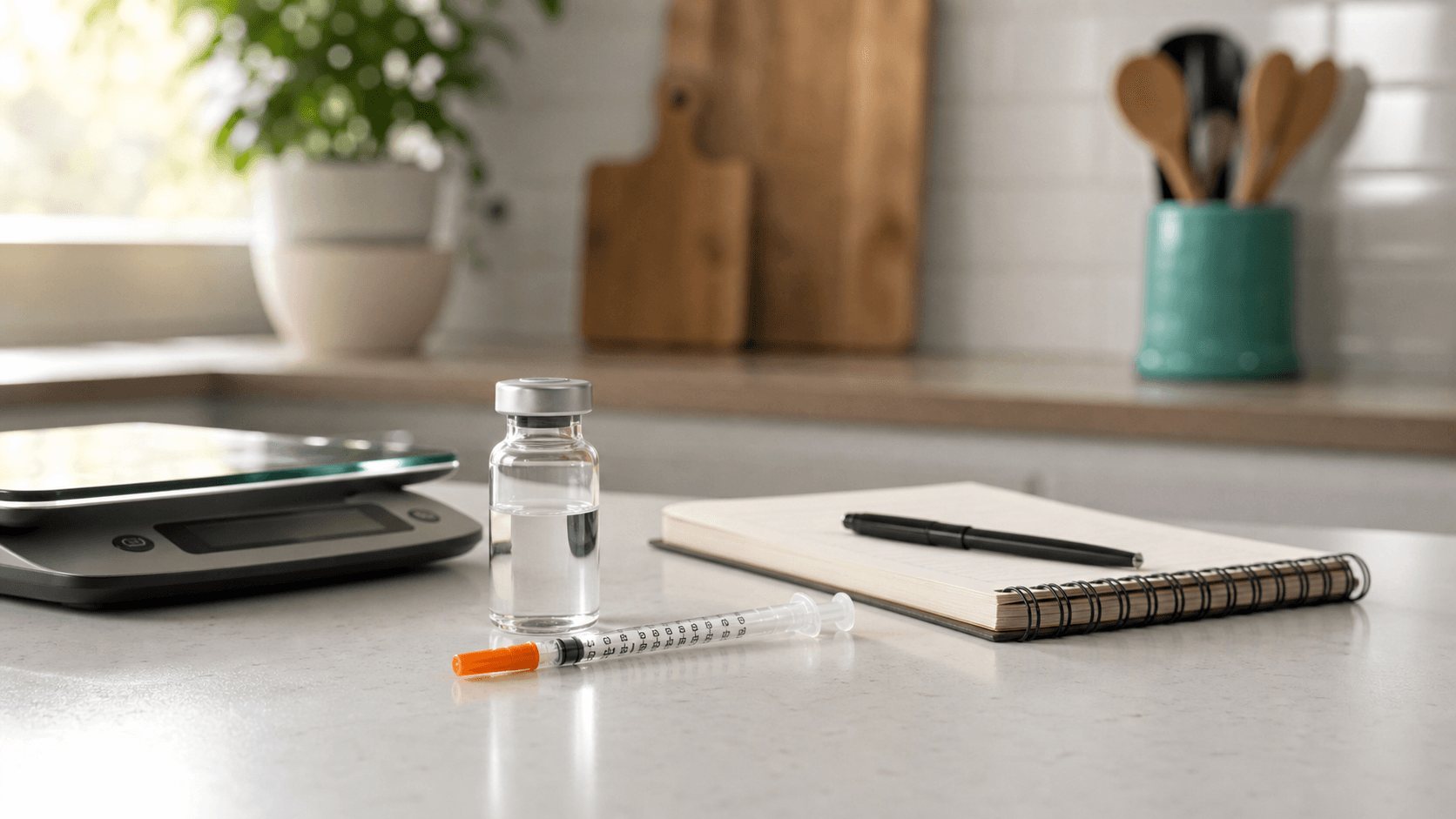
Low tech: A notebook or notes app. Date, dose, site, notes.
Mid tech: A spreadsheet with columns for each variable. Easy to see trends across weeks.
Higher tech: Apps like MyFitnessPal for weight plus a notes app for injection logs.
What matters most: Weigh at the same time on the same day — morning, after bathroom, before eating. Random weigh-ins produce noise, not data.
What to Do If You Miss a Dose
The 5-Day Rule
| When You Remember | What to Do |
|---|---|
| Same day as missed shot | Take it immediately |
| 1–4 days after missed shot | Take it as soon as possible; resume your original weekly day next week |
| 5+ days after missed shot | Skip it entirely; resume your next scheduled dose on your regular day |
| Multiple missed doses | Contact prescriber; may need to reduce dose to avoid side effects on restart |
Why You Should Not Double Dose
The half-life is 6 days. Injecting double the dose in one week to make up for a missed shot can produce severe GI effects. It is not worth it.
Extended Breaks (2+ Weeks Off)
If you have stopped for more than 2 weeks — travel, surgery, vial ran out — do not pick back up where you left off. Step back down one dose tier. GI tolerance resets somewhat, and returning to 8mg after a 3-week break can feel like starting fresh.
Adjusting the Protocol: When to Hold or Step Back
The escalation schedule is a guideline, not a mandate.
When to Hold at Current Dose
-
Nausea lasting more than 3–4 days post-injection
-
Vomiting more than once per injection cycle
-
Diarrhea disrupting daily life
-
Significant dehydration
-
Losing more than 4 lbs per week consistently (muscle loss risk increases)
-
Constipation that is persistent or uncomfortable. Constipation is a reported gastrointestinal effect of retatrutide alongside nausea, vomiting, and diarrhea in the Phase 2 obesity trial, and like the other GI effects it can be a reason to hold the current dose rather than escalate. (NEJM 2023 Phase 2 GI profile)
When to Step Back a Dose
- Side effects at current dose have been unmanageable for more than 2 weeks
- You escalated and feel significantly worse than at the previous dose
Stepping back is not failure. It is finding the dose that is sustainable long term.
When to Consider Stopping
Severe pancreatitis symptoms — upper abdominal pain radiating to the back — require stopping and seeking immediate medical care. This is rare but serious. See the retatrutide side effects guide for more detail.
Special Situations
Injecting Around Events or Travel
The worst nausea typically hits in the 12–36 hours post-injection. If a big event falls on Saturday, do not inject Friday. Shift to Thursday or wait until Sunday. You can shift injection day by a few days without meaningful impact on blood levels — just do not make it a habit.
Dosing During a Plateau
Plateaus typically appear around weeks 16–24. Options:
- Stay the course — plateaus often break on their own within 4–6 weeks
- Increase dose — if you are at 8mg and tolerating it well, 12mg may restart progress
- Audit diet — retatrutide suppresses appetite but does not override a caloric surplus from liquid calories, alcohol, or grazing
- Increase activity — the glucagon component responds well to exercise by boosting energy expenditure
Is It Recommended to Cycle Retatrutide Peptide Injections?
Cycling retatrutide — taking deliberate breaks from the protocol — is not part of the clinical trial design and is not a standard recommendation. Unlike some research peptides, retatrutide is designed for continuous use at the lowest effective maintenance dose. Short breaks (under 5 days) do not require dose adjustment. Longer breaks (2+ weeks) require stepping back a dose tier on restart. If you are considering stopping altogether, that is a discussion for your prescriber, not a self-managed cycling protocol.
Practical Injection Tips
Let the Injection Warm to Room Temperature
Cold peptide straight from the fridge hurts more and absorbs inconsistently. Take it out 10–15 minutes before injecting. Do not warm it in hot water — room temperature is sufficient.
The Pinch Technique
Pinch a fold of skin before inserting the needle at 45° (shorter needles) or 90° (longer ones). This places the medication in subcutaneous fat, not muscle. Intramuscular injection alters the absorption profile.
After the Injection
Do not rub the site. Hold light pressure with a dry cotton ball for 10 seconds. Rubbing spreads the medication outside the intended depot.
Storage
Keep reconstituted vials refrigerated at 36–46°F. Most are stable for 28–30 days after reconstitution. Cloudy or discolored liquid should not be used.
For reconstitution volumes and dosage calculations, see the retatrutide dosage guide.
Where to Source Retatrutide
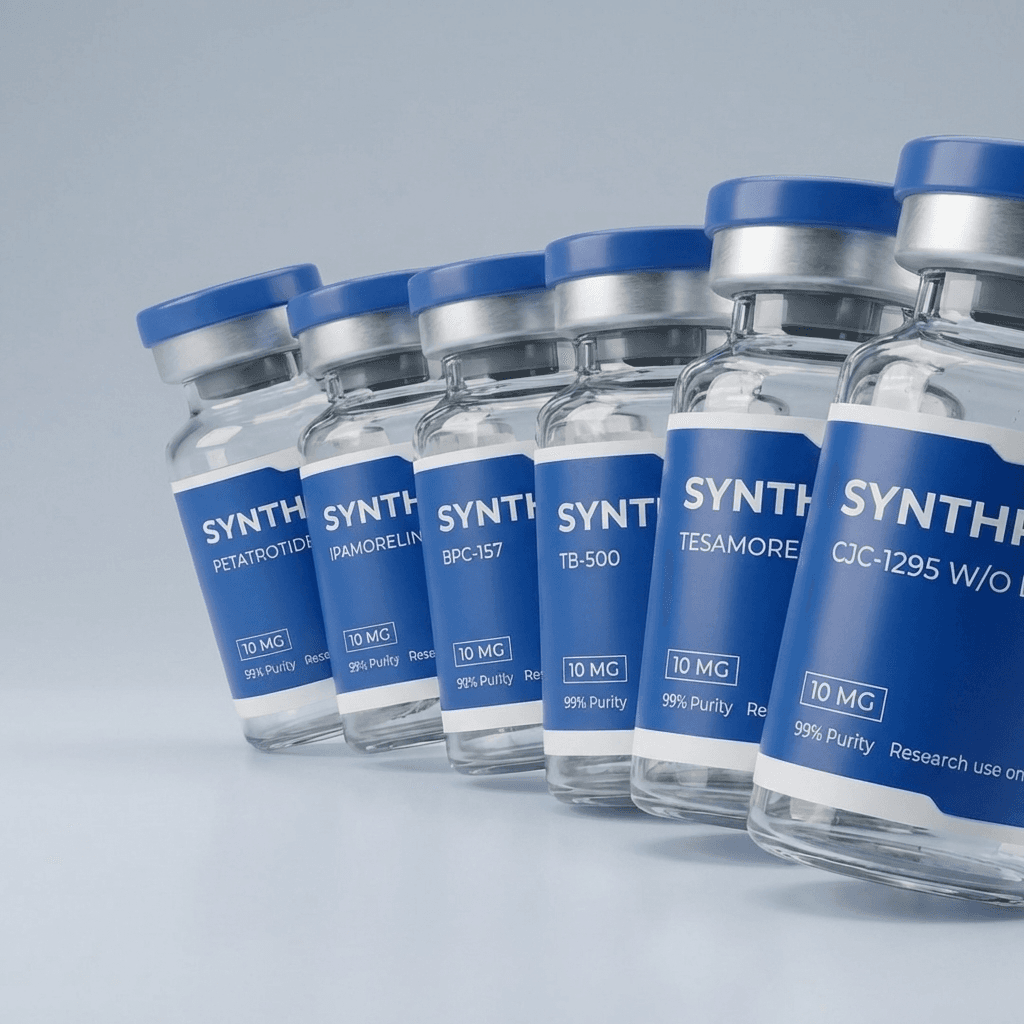
Retatrutide is not yet FDA-approved. It remains investigational. That said, high-quality peptide vendors offer it for those who have done their research and are working within appropriate contexts.
Ascension Peptides is our recommended source — third-party tested, transparent about purity, and carries multiple vial sizes to fit different protocol stages.
Frequently Asked Questions
How often do you inject retatrutide?
Once weekly. The 6-day half-life supports this schedule — blood levels stay relatively stable between injections.
What is the starting dose of retatrutide?
2mg once weekly for the first 4 weeks. Some protocols use 1mg for an extra-conservative start, particularly for people who are sensitive to GI side effects from other GLP-1 medications.
What is the best time to inject retatrutide?
The best time to inject retatrutide is evening for most people. Evening injection lets you sleep through the peak nausea window. Morning injection is a valid alternative if you have minimal nausea and want active appetite suppression during daylight hours.
When is the best time to inject retatrutide: morning or night?
Evening is generally preferred. You sleep through the first 8–10 hours of the side effect window. Morning works if you have no nausea issues and want appetite suppression active during breakfast and lunch. Try evening first; switch to morning if sleep is disrupted.
How long does it take to see results?
Appetite suppression often starts within the first week at 2mg. Measurable weight loss typically begins at 4–8mg (weeks 5–12). Significant results — 10%+ body weight — usually appear around weeks 16–24 at maintenance doses.
Can you inject retatrutide in the morning or evening?
Both are effective. Evening is the most commonly preferred approach because you sleep through the peak nausea window. Morning means appetite suppression is active during your highest-calorie hours. Try evening first and adjust if needed.
What happens if you miss a retatrutide injection?
If fewer than 5 days have passed, take it as soon as you remember and resume your normal schedule the following week. If 5 or more days have passed, skip the missed dose and continue from your next scheduled injection. Do not double up to compensate.
Can you stay at 8mg instead of escalating to 12mg?
Yes. Phase 2 data showed 8mg produced 22.8% weight loss at 48 weeks, close to the 12mg arm's 24.2%. If you are tolerating 8mg well and losing weight consistently, staying there is a valid choice.
How long do you stay on retatrutide?
Clinical trial data covers up to 68 weeks. Long-term use follows patterns similar to semaglutide — most people regain weight after stopping. Duration decisions depend on individual health goals and prescriber guidance.
What is the best time of day to take or administer retatrutide?
The best time of day to take retatrutide is in the evening for most users. Whether you searched "best time to take retatrutide", "best time to inject retatrutide", "best time to administer retatrutide", or "best time of day to take retatrutide" — the answer is the same: evening lets you sleep through the peak nausea window (roughly 8–16 hours post-injection). Morning is fine if you have minimal nausea and want active appetite suppression during meals. Pick a consistent day and stick with it; one to two days of variability is fine, more than that disrupts steady-state blood levels.
Related Guides
- Retatrutide Dosage: Reconstitution and Calculations
- Retatrutide Dosage Chart: Full Titration Table
- Retatrutide Side Effects: What to Watch For
This content is for informational purposes only and does not constitute medical advice. Retatrutide is an investigational compound. Consult a qualified healthcare provider before use. Individual results vary.