

24.2% body weight lost. Not 10%. Not 15%. Twenty-four point two percent — in a Phase 2 trial of people who had never been on this drug before. That number stopped researchers cold, and it should stop you cold too.
- Retatrutide (LY3437943) is an investigational injectable developed by Eli Lilly — the same company behind Mounjaro and Zepbound
- It's a triple agonist: it hits GLP-1, GIP, and glucagon receptors all at once — no other approved weight loss drug does this
- The glucagon component is actually a feature, not a bug — it boosts energy expenditure and accelerates fat burning in ways semaglutide and tirzepatide simply can't
- Phase 2 TRIUMPH results showed weight loss that blew past both Ozempic and Mounjaro benchmarks
- It's not FDA-approved yet, but Phase 3 trials are actively enrolling and results are trickling in as of early 2026
- "Retatrutide HA" refers to a specific salt/formulation — more on that below
You've probably heard of Ozempic. Maybe Mounjaro. Retatrutide is the next step — and if you're someone who's tried GLP-1s or dual agonists and hit a plateau, or you're just starting to research your options, this one deserves your attention. Not because it's hyped, but because the data is genuinely unusual. Let's break down what it actually is, how it works differently from anything else on the market, and what you realistically need to know before making any decisions.
What Is Retatrutide, Exactly?
Retatrutide is an investigational once-weekly subcutaneous (under the skin) injection developed by Eli Lilly and Company. Its internal identifier is LY3437943. No brand name has been officially approved yet — when people say "retatrutide brand name," the honest answer is: there isn't one officially. Lilly will name it when (and if) it clears FDA approval, likely sometime in 2026 or 2027 if current trial timelines hold.
What makes it structurally different from its predecessors is that it's engineered to bind to and activate three separate hormone receptors simultaneously:
- GLP-1 receptor (glucagon-like peptide-1)
- GIP receptor (glucose-dependent insulinotropic polypeptide)
- Glucagon receptor
Semaglutide (Ozempic/Wegovy) hits one. Tirzepatide (Mounjaro/Zepbound) hits two. Retatrutide hits three. That's the headline, but the glucagon piece is where it gets genuinely interesting — and genuinely misunderstood.
A Quick Note on the Name
"Retatrutide" is the INN (International Nonproprietary Name) — the generic chemical name. You'll also see "retatrutide peptide" used interchangeably, which is technically accurate since it is a synthetic peptide. It's sometimes abbreviated "retta" in online forums. Nothing fancy there.
What Is Retatrutide HA?
If you've seen "retatrutide HA" on supplier websites or in research forums, you're not imagining a different drug. HA refers to the hydrochloride acetate salt form of the peptide — a specific chemical formulation that affects how the compound is manufactured, stored, and dissolved.
Salt forms matter in peptide chemistry because they affect:
- Solubility (how well it dissolves in solution)
- Stability (how long it stays active before degrading)
- Bioavailability (how effectively the body can use it)
Retatrutide HA is the form most commonly used in research and compounding contexts. Think of it like the difference between a medication in its freebase form versus its salt form — same active compound, different physical properties. When you're evaluating suppliers, the HA designation is a quality and formulation indicator, not a sign of a different compound.
The Triple Agonist Mechanism — Why Three Receptors?
GLP-1: The Appetite Regulator
GLP-1 (glucagon-like peptide-1) is released naturally from your gut after you eat. It does several things:
- Signals your pancreas to release insulin (glucose-dependent — meaning it only does this when blood sugar is elevated)
- Tells your brain you're full — slowing stomach emptying so you stay satisfied longer
- Reduces the liver's glucose output
GLP-1 agonists like semaglutide work by mimicking this hormone. They're effective. But they have a ceiling. Retatrutide activates the GLP-1 receptor too — this is the shared foundation.
GIP: The Amplifier
GIP (glucose-dependent insulinotropic polypeptide) is another gut hormone that amplifies insulin release. For a long time, researchers weren't sure if targeting GIP was beneficial for weight loss — early thinking was actually that blocking GIP might help. Tirzepatide changed that conversation by combining GLP-1 and GIP activation, showing that agonizing both receptors works synergistically.
Retatrutide includes GIP activation for this same amplification effect — enhanced insulin sensitivity, better glucose control, and apparent support for fat breakdown in adipose tissue.
Glucagon: The Part Everyone Gets Wrong
Here's where people get confused. Glucagon is the hormone that raises blood sugar — it's secreted by the pancreas when you're fasting or when blood sugar drops. So why on earth would a weight loss drug activate the glucagon receptor?
Because in the context of a GLP-1 agonist doing its job, the hyperglycemic effect of glucagon is essentially neutralized. What you get instead are glucagon's other effects:
- Increased energy expenditure — glucagon receptor activation increases the rate at which your body burns calories, even at rest
- Direct fat breakdown (lipolysis) — glucagon signals fat cells to release stored fatty acids for fuel
- Increased thermogenesis — essentially, your body runs slightly hotter
This is the critical insight that separates retatrutide from tirzepatide. Tirzepatide doesn't touch the glucagon receptor. Retatrutide does — and that extra lever appears to be responsible for the additional 5–8% body weight loss it shows over tirzepatide in head-to-head Phase 2 comparisons.
(Side tangent: the glucagon paradox is genuinely one of the more counterintuitive things in modern metabolic pharmacology. The same hormone that your body releases when you're starving can, in the right context, become a fat-burning accelerant. Drug development is weird.)
How Does Retatrutide Work, Step by Step?
Here's the practical version of the mechanism of action (MOA):
Step 1 — You Inject Once a Week
Retatrutide is subcutaneous, like insulin. You inject it into fatty tissue (belly, thigh, upper arm). From there it slowly absorbs into the bloodstream over days, which is why weekly dosing is sufficient.
Step 2 — It Binds to All Three Receptors
Once circulating, retatrutide simultaneously activates GLP-1, GIP, and glucagon receptors across multiple tissues:
- Pancreas (insulin regulation)
- Brain/hypothalamus (appetite suppression)
- Liver (glucose metabolism)
- Fat tissue (lipolysis)
- Muscle (insulin sensitivity)
Step 3 — Appetite Suppression Kicks In
This happens relatively quickly — most people report noticeably reduced hunger within the first few weeks. The "food noise" reduction many GLP-1 users describe is real and often even more pronounced with triple agonists.
Step 4 — Metabolism Upregulation
This is slower. The glucagon-mediated increase in energy expenditure and fat burning becomes more apparent over months. It's part of why the weight loss curves in retatrutide trials continue trending downward through week 48 instead of plateauing early.
Step 5 — Metabolic Reset
Over time, improved insulin sensitivity, lower fasting glucose, reduced triglycerides, and better adipokine balance (think: leptin, adiponectin) compound each other. The body gets more metabolically efficient in ways that go beyond just "eating less."
TRIUMPH Phase 2 Results — The Numbers That Matter
The Phase 2 TRIUMPH trial (NCT04881760) enrolled adults with obesity (BMI ≥30) or overweight (BMI ≥27 with at least one weight-related condition) without type 2 diabetes. Here's what happened:
| Dose | Mean Weight Loss (48 wks) | % Achieving ≥10% Loss | % Achieving ≥20% Loss |
|---|---|---|---|
| Placebo | 2.1% | ~10% | ~2% |
| Retatrutide 1mg | 8.7% | ~46% | ~14% |
| Retatrutide 4mg | 17.1% | ~81% | ~49% |
| Retatrutide 8mg | 22.8% | ~93% | ~74% |
| Retatrutide 12mg | 24.2% | ~96% | ~83% |
For context: semaglutide 2.4mg (Wegovy) showed ~15% average weight loss in its pivotal trial. Tirzepatide (Mounjaro/Zepbound) showed ~20–22% at its highest dose. Retatrutide at 12mg hit 24.2% — and the curve hadn't fully flattened at week 48, suggesting longer treatment might push that higher.
In March 2026, Eli Lilly announced Phase 3 TRIUMPH results showing statistically significant reductions in both HbA1c and body weight in adults with type 2 diabetes — the first late-stage trial readout for this drug. The obesity-specific Phase 3 data is expected to follow.
These Phase 2 results were published in the New England Journal of Medicine in 2023 (Jastreboff AM et al., "Triple-Hormone-Receptor Agonist Retatrutide for Obesity: A Phase 2 Trial," N Engl J Med 2023;389:514-526). The peer-reviewed paper reports the 24.2% least-squares mean weight reduction at the 12mg dose at 48 weeks versus 2.1% with placebo, the same figures shown in the table below.
Retatrutide vs. Semaglutide vs. Tirzepatide
This is the comparison table you actually need — without the marketing fluff:
| Feature | Semaglutide (Ozempic/Wegovy) | Tirzepatide (Mounjaro/Zepbound) | Retatrutide (LY3437943) |
|---|---|---|---|
| Receptor targets | GLP-1 only | GLP-1 + GIP | GLP-1 + GIP + Glucagon |
| Average weight loss | ~15% | ~20–22% | ~24.2% (Phase 2, 12mg) |
| FDA approval (weight loss) | ✅ Approved (Wegovy) | ✅ Approved (Zepbound) | ❌ Not yet approved |
| Dosing | Once weekly injection | Once weekly injection | Once weekly injection |
| Energy expenditure boost | Indirect/minimal | Modest (via GIP) | Significant (glucagon-mediated) |
| Manufacturer | Novo Nordisk | Eli Lilly | Eli Lilly |
| Availability | Widely available | Widely available | Clinical trials / research use |
| Brand name | Ozempic / Wegovy | Mounjaro / Zepbound | TBD (not yet named) |
| Heart rate effect | Slight increase | Slight increase | Slight increase (under study) |
The honest difference: each generation adds a receptor, and each addition has driven meaningfully better outcomes. That's not always how drug development works — usually there's diminishing returns. Here, adding glucagon activation appears to have compounded the effects rather than just adding incrementally.
What Is Retatrutide Used For?
Primary Indication: Obesity and Weight Management
The main reason retatrutide is being developed and studied is chronic weight management in adults with obesity (BMI ≥30) or overweight (BMI ≥27) with at least one weight-related health condition such as hypertension, type 2 diabetes, or sleep apnea.
Type 2 Diabetes
The Phase 3 trial announced in March 2026 specifically studied adults with type 2 diabetes. Results showed significant HbA1c reductions — the drug works on blood sugar control independently of its weight loss effects, though the two are clearly interrelated.
Potential Future Indications
Early research and ongoing sub-studies are examining:
- Non-alcoholic fatty liver disease (NAFLD/NASH) — the glucagon component appears particularly relevant here, as it reduces liver fat directly
- Cardiovascular risk reduction — follow-on from the weight and metabolic improvements seen
- Lipid management — triglyceride reduction has been consistently noted in trial data
- Polycystic ovary syndrome (PCOS) — where insulin resistance and weight are intertwined drivers
None of these secondary indications are approved, and trials specifically powered for them are limited. But they're worth noting as part of the broader picture.
Benefits Overview
For a deeper look at the full benefit profile, check out our retatrutide benefits guide. But here's the short version:
Weight Loss Magnitude
The most obvious one. 24.2% average loss in the highest-dose Phase 2 group puts it well beyond anything currently FDA-approved. For someone at 250 lbs, that's ~60 lbs — comparable to bariatric surgery outcomes in some patients.
Metabolic Health Improvements
Beyond weight, participants showed:
- Reduced fasting blood glucose and HbA1c
- Lower triglycerides (often dramatically)
- Improved HDL cholesterol
- Better insulin sensitivity across muscle and fat tissue
- Reduced inflammation markers
Appetite and "Food Noise" Suppression
The GLP-1 component does the heavy lifting here. Most users of GLP-1 and dual-agonist drugs describe an almost eerie reduction in food preoccupation — the constant mental chatter about food quiets down. Retatrutide appears to amplify this effect.
Potential Liver Fat Reduction
The glucagon component directly promotes hepatic fat metabolism. For people with NAFLD or elevated liver enzymes related to fat accumulation, this is a distinct advantage over GLP-1-only agents.
Who Is Retatrutide For?
(And who it's absolutely not for.)
Who It May Eventually Be For:
- Adults with a BMI ≥30, or ≥27 with a weight-related condition
- People who've tried semaglutide or tirzepatide but haven't reached their weight goals
- Those with type 2 diabetes and significant weight issues where current dual-agonists aren't cutting it
- Anyone whose physician determines the risk-benefit profile is appropriate
Who Should Not Use It:
- Anyone with a personal or family history of medullary thyroid carcinoma (MTC) — all GLP-1-class drugs carry this contraindication
- Anyone with Multiple Endocrine Neoplasia syndrome type 2 (MEN 2)
- Pregnant or breastfeeding individuals — not studied in this population, effects unknown
- People with a history of pancreatitis — GLP-1 class drugs increase risk; triple agonists compound this concern
- Anyone with severe gallbladder disease — rapid weight loss accelerates gallstone formation; this is a class effect
- People with active eating disorders — the appetite suppression mechanism requires careful monitoring in this context
- Anyone who would use this without medical supervision — seriously, this isn't a casual decision
The side effect profile includes nausea, vomiting, diarrhea, and constipation — typical for the GLP-1 class, often most pronounced in the first weeks. For a detailed breakdown of what to expect, see our retatrutide side effects guide.
Retatrutide Availability — Where Things Stand
This is where I want to be genuinely straight with you. Retatrutide is not FDA-approved as of early 2026. It is in Phase 3 clinical trials with Eli Lilly. The TRIUMPH-3 program is ongoing.
What That Means Practically
You cannot get a prescription for it. Eli Lilly is not selling it. There is no approved pharmacy that stocks it. The brand name doesn't exist yet.
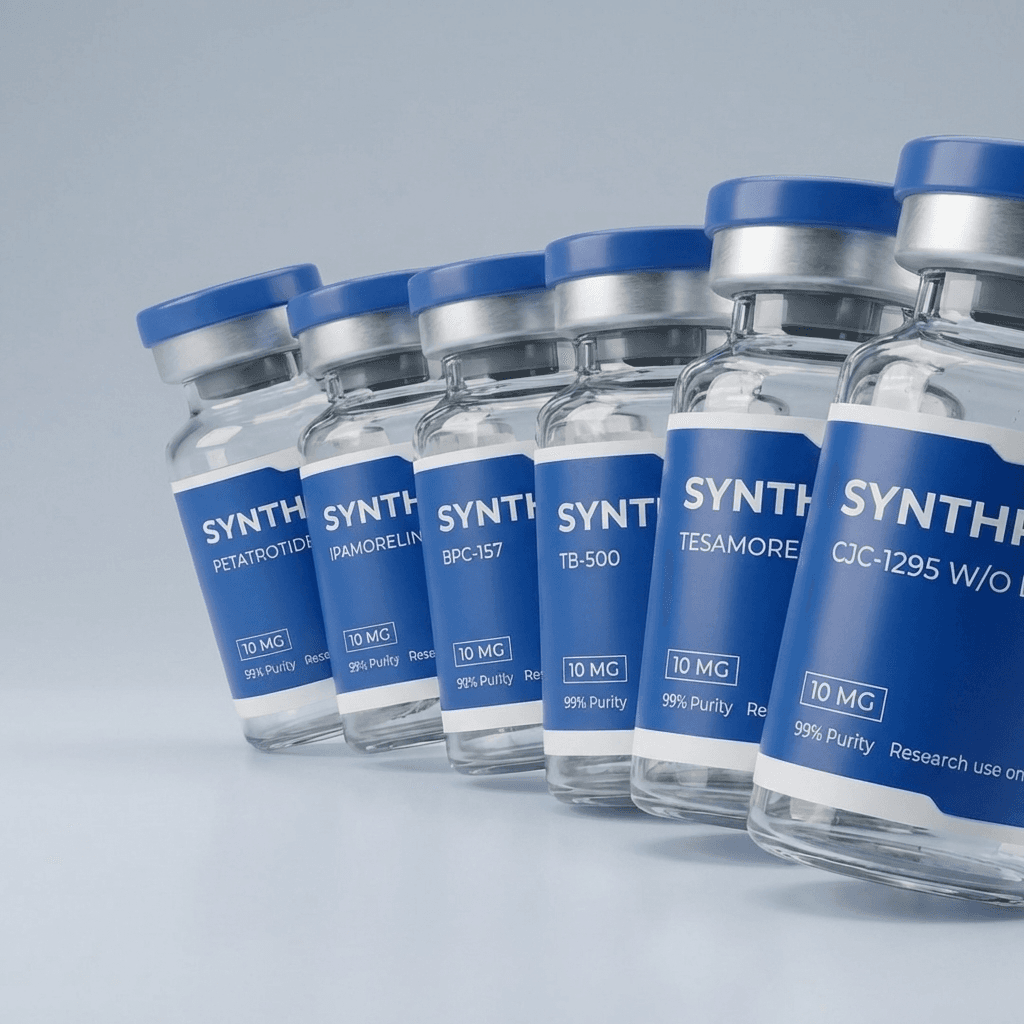
What does exist is a market of peptide suppliers offering retatrutide for "research" purposes. These products exist in a legal gray area — they're not regulated the same way pharmaceutical drugs are, quality control varies widely, and the purity and dosing accuracy of what you're buying can differ dramatically from supplier to supplier.
If you're exploring this route, our guide on where to buy retatrutide covers what to look for in a supplier — including third-party testing, certificate of analysis requirements, and red flags. And our retatrutide cost breakdown gives you realistic pricing expectations.
If you want a source that's established in this space, Ascension Peptides is one we reference regularly for quality and consistency.
Retatrutide Dosage — What the Trials Used
For full dosing information, see our dedicated retatrutide dosage guide. But the Phase 2 trial structure looked like this:
| Phase | Starting Dose | Titration | Maximum Dose |
|---|---|---|---|
| Phase 2 (TRIUMPH) | 0.5mg or 1mg/week | Gradual escalation over 16–20 weeks | 12mg/week |
| Phase 3 (ongoing) | 1mg/week | Titration protocol TBD (FDA-aligned) | Expected 12mg/week |
Slow titration is critical with retatrutide. The GI side effects (nausea especially) are dose-dependent and largely manageable with proper escalation. Jumping to higher doses quickly is how people end up miserable and quitting.
What Does Retatrutide Do to Your Body Over Time?
Here's roughly what the trajectory looks like based on trial data:
Weeks 1–4: Adjustment Phase
Nausea is common. Appetite starts reducing. Energy expenditure begins to shift. Weight loss is typically modest at this stage — 1–3 lbs depending on starting dose.
Weeks 5–16: Active Titration
Doses increase according to protocol. Weight loss accelerates. The "food noise" reduction becomes more noticeable. Some people report changes in food preferences — not just eating less, but caring less about high-fat, high-sugar foods specifically.
Weeks 17–48: Sustained Loss
This is where retatrutide distinguishes itself. Most GLP-1 drugs show a plateau or slowdown in weight loss by week 24–32. Retatrutide's curves in Phase 2 continued declining through week 48, suggesting the glucagon-mediated energy expenditure component keeps compounding.
Beyond Week 48: Unknown Territory
Phase 3 will help answer the long-term durability question. Like all weight loss medications, retatrutide almost certainly requires continued use to maintain results — stopping GLP-1 class drugs typically results in regain over months. Retatrutide is not expected to be different.
For visual documentation of what real people have experienced, we've compiled retatrutide before and after results — with the appropriate grain of salt on anecdotal data.
Eli Lilly and Retatrutide — The Corporate Context
Eli Lilly developed retatrutide as the next evolution after tirzepatide (Mounjaro/Zepbound). The company has invested billions in its obesity pipeline — they're building a $3.5 billion manufacturing facility in part to support next-generation obesity medications including retatrutide.
The internal designation LY3437943 follows Lilly's naming convention. The drug has been in development since at least 2018, with IND filings and early Phase 1 safety data preceding the Phase 2 TRIUMPH trials.
Lilly's Phase 3 TRIUMPH program includes:
- TRIUMPH-1: Obesity-specific outcomes in adults without diabetes
- TRIUMPH-2: Obesity with type 2 diabetes (Phase 3 positive results announced March 2026)
- TRIUMPH-3: Cardiovascular outcomes study (longer-term, still enrolling)
The March 2026 Phase 3 announcement — confirming statistically significant HbA1c reduction and weight loss in type 2 diabetics — marked a meaningful regulatory milestone. An FDA filing could come as early as late 2026 based on standard timelines.
GLP-3? What Is Retatrutide GLP-3?
You'll sometimes see retatrutide described as a "GLP-3 agonist" — usually in forums or less rigorous articles. This is a misnomer. GLP-3 (glucagon-like peptide-3) is a technically real peptide but not a clinical target, and retatrutide does not act on it.
The confusion likely comes from the triple-agonist framing — people shorthand "triple GLP" to "GLP-3." It doesn't work that way. The correct description is GIP/GLP-1/glucagon triple hormone receptor agonist — sometimes abbreviated GGG agonist.
The "retatrutide glp 3" search query is popular, which is why I'm addressing it directly: the compound acts on GLP-1, GIP, and glucagon receptors. Full stop. No GLP-3 involved.
Frequently Asked Questions About Retatrutide
The Bottom Line
Retatrutide is the most effective weight loss drug tested in controlled Phase 2 trials, full stop. 24.2% average body weight reduction at 12mg, with curves that hadn't plateaued by week 48. The triple-agonist mechanism — particularly the glucagon component — does something no currently approved drug does: it actively increases your body's caloric expenditure while simultaneously cutting intake.
It's not approved yet. You can't get a prescription. The long-term data is still being collected. But the Phase 3 TRIUMPH program is generating real results, and if those hold, we're looking at a drug that could genuinely change what's possible for metabolic medicine.
If you're actively considering your options right now, work through the cluster of articles we've put together: start with retatrutide dosage if you're trying to understand protocols, retatrutide benefits for the full picture, retatrutide side effects for what to expect, and retatrutide cost if you're budgeting. When you're ready to source, Ascension Peptides is where we'd point you.
Medical Disclaimer: This article is for informational purposes only and does not constitute medical advice, diagnosis, or treatment recommendations. Retatrutide is not FDA-approved as of the date of publication. Nothing here should be interpreted as encouraging self-medication or use outside of a clinical or legally sanctioned context. Always consult a qualified healthcare provider before starting, stopping, or modifying any treatment protocol. Individuals with thyroid cancer history, MEN 2, pancreatitis, or pregnancy should not use GLP-1 class drugs without specific medical guidance.