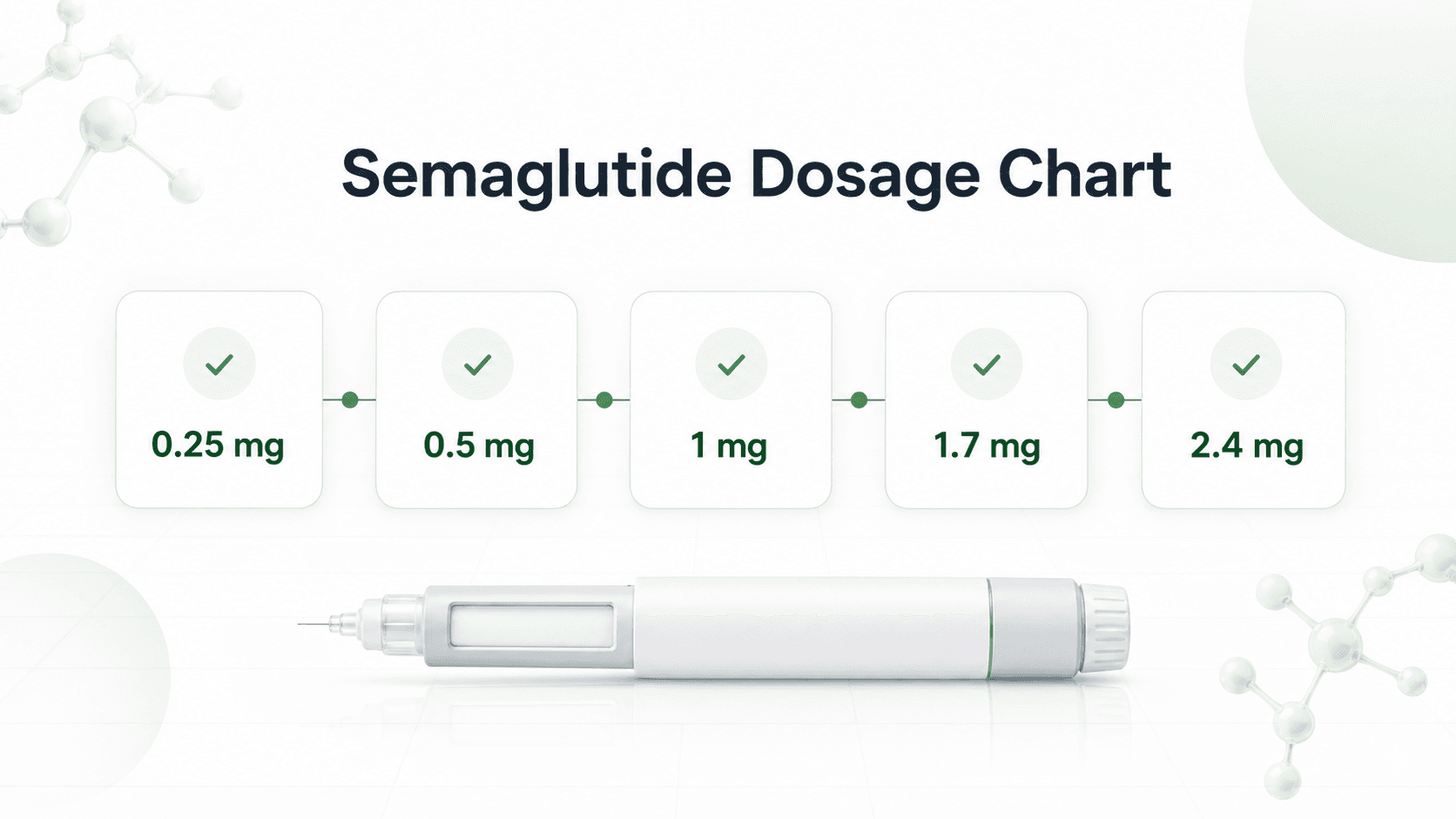
Semaglutide dosing usually starts low and increases slowly. For weekly injectable semaglutide, the familiar escalation path begins at 0.25 mg once weekly and can move through 0.5 mg, 1 mg, 1.7 mg, and 2.4 mg, depending on the product, goal, tolerance, and prescriber plan.
| Quick answer | What to know |
|---|---|
| Starting weekly injection dose | 0.25 mg once weekly is commonly used as the tolerance-building start |
| Common Ozempic path | 0.25 mg -> 0.5 mg -> 1 mg -> 2 mg in diabetes-focused prescribing context |
| Common Wegovy path | 0.25 mg -> 0.5 mg -> 1 mg -> 1.7 mg -> 2.4 mg in chronic weight-management context |
| Oral semaglutide path | 3 mg daily -> 7 mg daily -> 14 mg daily for Rybelsus-style oral dosing |
| Biggest mistake | Confusing mg with syringe units on compounded vials |
This page is a reference chart, not personal dosing advice. Semaglutide dosing should be managed by a licensed clinician because the right dose depends on the product, indication, side effects, other medications, and medical history.
Semaglutide dosage chart by product
Semaglutide is the active ingredient, but the dose schedule changes by product. Ozempic, Wegovy, Rybelsus, and compounded semaglutide are not all used the same way.
| Product/context | Form | Common dose path | Main use context |
|---|---|---|---|
| Ozempic | Weekly injection | 0.25 mg, 0.5 mg, 1 mg, 2 mg | Type 2 diabetes and blood-sugar control context |
| Wegovy | Weekly injection | 0.25 mg, 0.5 mg, 1 mg, 1.7 mg, 2.4 mg | Chronic weight-management context |
| Rybelsus | Daily oral tablet | 3 mg, 7 mg, 14 mg | Oral semaglutide for type 2 diabetes context |
| Compounded semaglutide | Usually vial/syringe | Depends on concentration and prescriber plan | Concentration must be converted carefully; units are not universal |
The key SEO answer is simple: semaglutide doses are written in milligrams, but compounded vial instructions often require a separate syringe-unit conversion. A 10-unit dose can mean different things depending on the vial concentration.
Wegovy-style semaglutide dosage chart
Wegovy-style dosing is the version most people recognize from weight-loss discussions. The dose usually increases every 4 weeks if tolerated.
| Weeks | Dose | What this phase is for |
|---|---|---|
| Weeks 1-4 | 0.25 mg once weekly | Starter dose for tolerance; not the main maintenance dose |
| Weeks 5-8 | 0.5 mg once weekly | Early escalation; appetite changes may become more noticeable |
| Weeks 9-12 | 1 mg once weekly | Mid-escalation; GI tolerance matters |
| Weeks 13-16 | 1.7 mg once weekly | Higher-dose step before full maintenance |
| Week 17+ | 2.4 mg once weekly | Common target maintenance dose for weight-management labeling |
The important pattern is the 4-week step-up rhythm. People often want to rush the chart because the starting dose feels too small, but the slow climb is there to reduce nausea, vomiting, reflux, constipation, and discontinuation risk.
Ozempic-style semaglutide dosage chart
Ozempic-style dosing is usually discussed in type 2 diabetes context. It also starts at 0.25 mg weekly, but the higher-dose path is different from Wegovy.
| Stage | Dose | Common context |
|---|---|---|
| Start | 0.25 mg once weekly for 4 weeks | Tolerance-building start |
| Early treatment | 0.5 mg once weekly | First main treatment step |
| If more control is needed | 1 mg once weekly | Escalation after clinician review |
| Higher-dose option | 2 mg once weekly | Higher diabetes-focused dose when appropriate |
Ozempic and Wegovy both contain semaglutide, but they are not interchangeable as a dosing plan. They have different product labels, indications, pens, strengths, and treatment goals.
If the reader is trying to understand the drug itself first, use the main semaglutide guide. If they are comparing semaglutide with tirzepatide, use tirzepatide vs semaglutide.
Rybelsus oral semaglutide dosage chart
Rybelsus is oral semaglutide, so the chart looks different. It is usually discussed as a daily tablet rather than a weekly injection.
| Stage | Dose | Timing context |
|---|---|---|
| First 30 days | 3 mg once daily | Starter dose used to begin treatment |
| After 30 days | 7 mg once daily | Common next step |
| If more effect is needed | 14 mg once daily | Higher oral dose option after clinician review |
Oral semaglutide has administration rules that do not apply to injections. The tablet timing, water amount, and waiting period before food or other medications matter. Do not convert Rybelsus milligrams to injection milligrams as if they were the same product.
Why the starting dose is only 0.25 mg
The 0.25 mg weekly injection dose is not meant to be the dramatic result dose. It is mainly there to help the stomach and appetite system adapt.
That matters because semaglutide can slow gastric emptying and change appetite signals. If the dose increases too quickly, the most common failure point is not that the medication stops working. It is that side effects become too uncomfortable.
Common early issues include:
- Nausea
- Constipation
- Diarrhea
- Reflux or burping
- Early fullness
- Lower appetite
- Food aversions
- Vomiting when meals are too large or high-fat
For a practical first-dose timeline, read what to expect on day 1 of semaglutide. For broader symptom management, use the GLP-1 side effects guide.
Semaglutide dosage chart for weight loss vs diabetes
The same active ingredient can sit in different treatment contexts.
| Question | Weight-management context | Diabetes context |
|---|---|---|
| Common brand people mention | Wegovy | Ozempic or Rybelsus |
| Main public goal | Chronic weight management | Blood-sugar control, sometimes weight change |
| Weekly target often discussed | 2.4 mg | 0.5 mg, 1 mg, or 2 mg depending on need |
| Dose increases | Usually follows a stepwise escalation | Based on glucose response, tolerance, and prescriber plan |
| What to monitor | Weight trend, appetite, tolerance, nutrition quality | Glucose, A1C, hypoglycemia risk with other diabetes medications, tolerance |
This is why searchers get confused. A dosage chart for one product can be accurate and still be wrong for a different semaglutide product.
Compounded semaglutide: mg vs units
Compounded semaglutide creates the most dosage-chart confusion because vial instructions often mention syringe units.
Here is the rule:
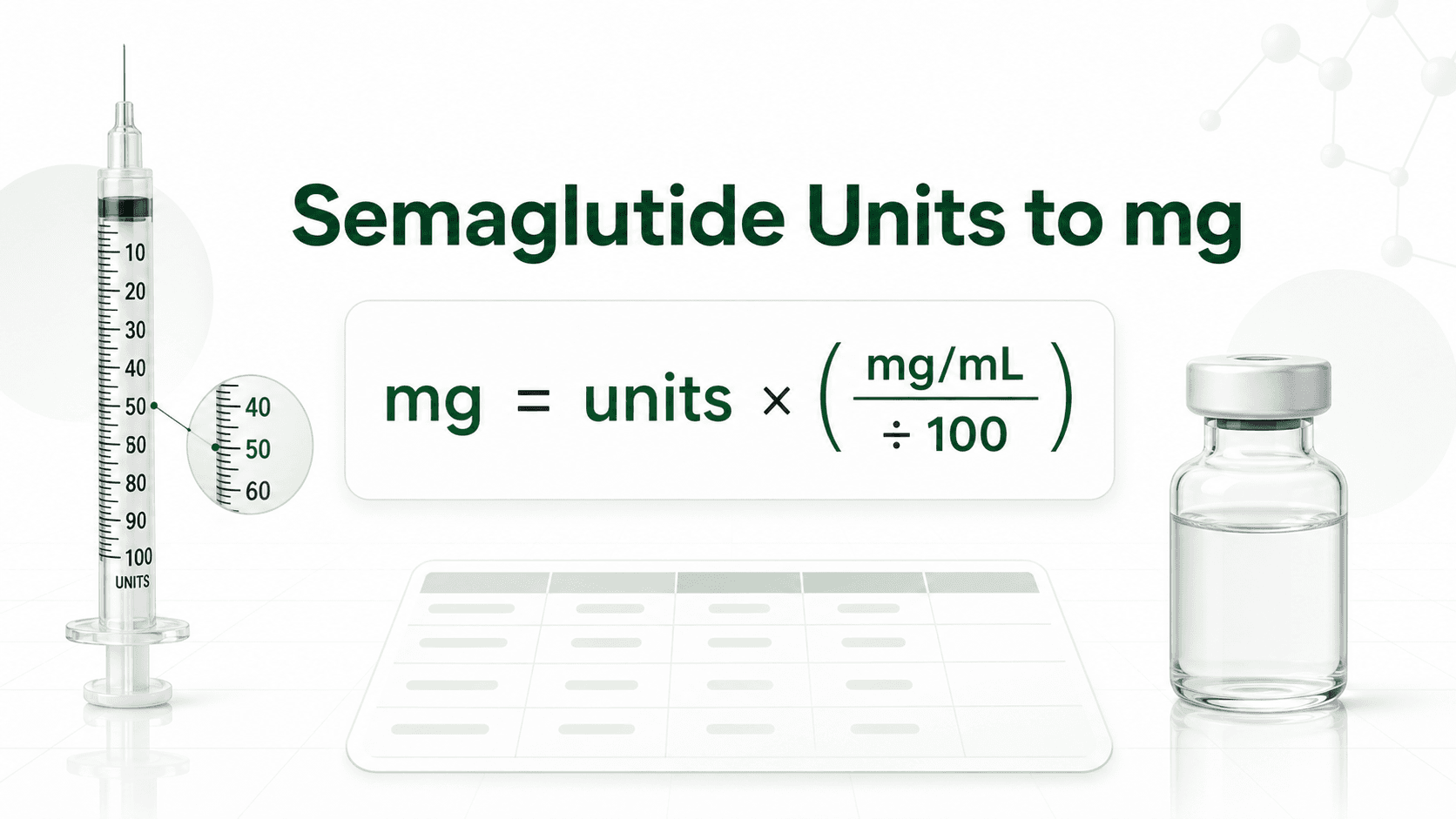
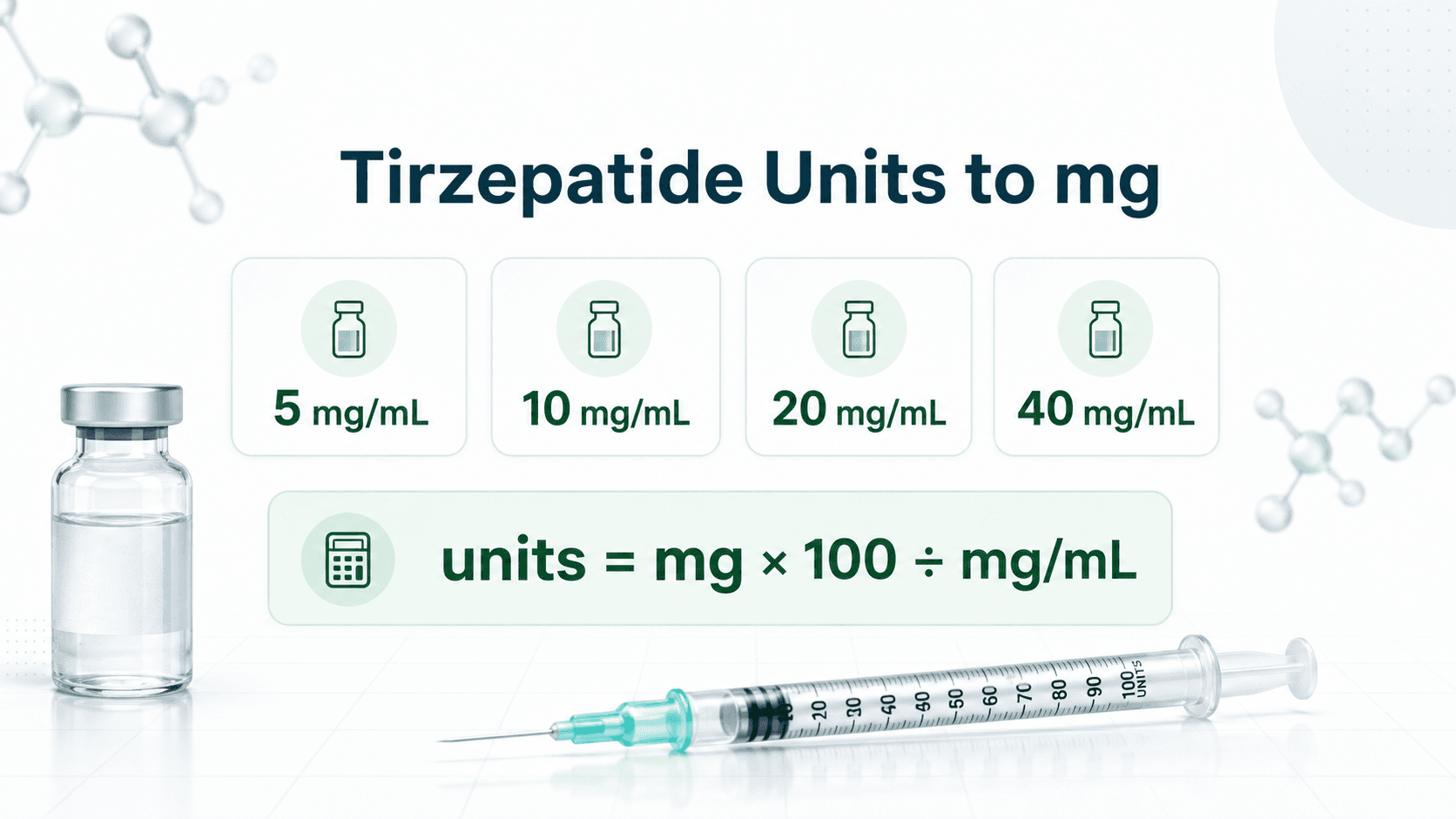
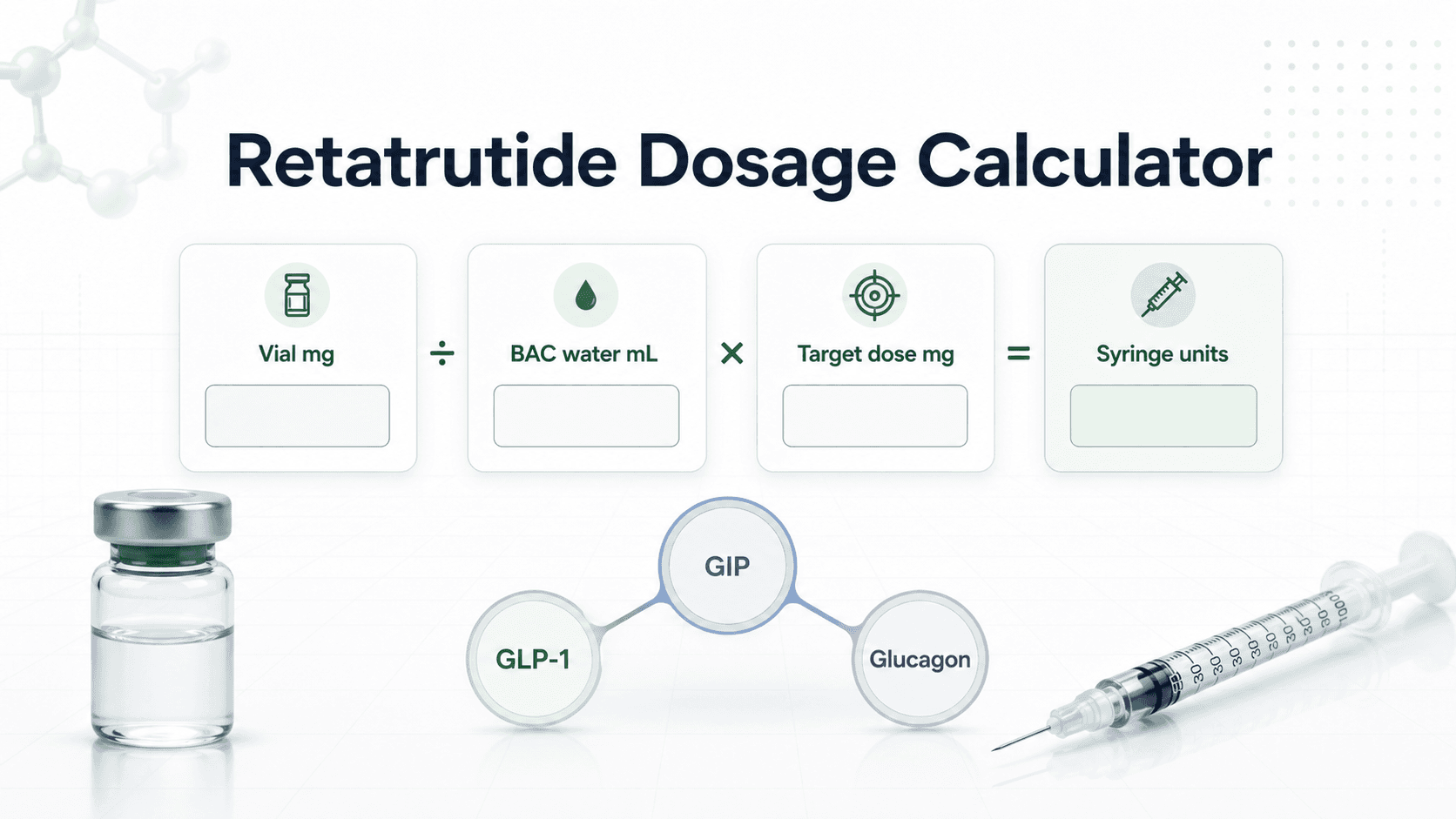
Milligrams describe the semaglutide dose. Units describe the syringe volume. Units only make sense when you know the concentration.
| If the vial concentration is... | Then 0.25 mg equals... | Then 0.5 mg equals... |
|---|---|---|
| 1 mg/mL | 0.25 mL | 0.5 mL |
| 2.5 mg/mL | 0.1 mL | 0.2 mL |
| 5 mg/mL | 0.05 mL | 0.1 mL |
On a U-100 insulin syringe, 1 mL equals 100 units. That means 0.1 mL equals 10 units, but only the volume is universal. The amount of semaglutide inside that volume changes with concentration.
That is why two people can both say they take "10 units" and be taking different semaglutide doses.
A dedicated semaglutide units-to-mg guide should handle the unit math in more detail. This page is the dose-chart overview.
When people usually increase the dose
Most semaglutide charts use a minimum time at each dose before escalation. In practice, dose increases are usually based on three questions:
- Has enough time passed at the current dose?
- Are side effects manageable?
- Does the prescriber think more effect is needed?
A person with persistent nausea, vomiting, dehydration, severe constipation, or reflux may need to pause escalation or discuss options. A person tolerating the dose well may still stay longer at a lower dose if the current dose is working.
The chart is a framework, not a command.
What if the dose feels too low?
A low starting dose can feel frustrating, especially when someone expects appetite suppression right away. But the early phase is not a failure.
Semaglutide often becomes more noticeable after several weeks because:
- The drug is taken weekly and builds over time.
- The first dose is intentionally conservative.
- Appetite changes can lag behind the first injection.
- Side effects and benefits do not always appear on the same timeline.
If nothing happens on day 1, that is common. If nothing happens after several dose steps, that is a different discussion for the prescriber.
What if side effects show up during escalation?
Side effects are most likely to become a problem when the dose increases or when meals do not match the medication's effect.
Common triggers include:
- Large meals
- High-fat meals
- Eating quickly
- Alcohol
- Low fluid intake
- Low fiber tolerance or abrupt fiber increases
- Constipation that goes unmanaged
- Increasing the dose before the previous dose feels stable
Call a clinician promptly for severe abdominal pain, repeated vomiting, dehydration signs, faintness, possible low blood sugar, allergic reaction, or symptoms that keep worsening.
How this chart should be used
Use this chart to understand the structure of semaglutide dosing. Do not use it to override a prescription, compounder label, or clinician plan.
The safest way to use a dosage chart is to ask:
- Which semaglutide product am I using?
- Is this for diabetes, chronic weight management, or another context?
- Is my dose written in mg, mL, or syringe units?
- What is the vial concentration if this is compounded?
- How long have I been on this dose?
- Are side effects mild, manageable, severe, or worsening?
- What other medications could change risk, especially insulin or sulfonylureas?
FAQ
What is the normal starting dose of semaglutide?
For weekly injectable semaglutide, the common starter dose is 0.25 mg once weekly for 4 weeks. This is usually a tolerance-building dose rather than the main maintenance dose.
What is the highest semaglutide dose?
It depends on the product. Wegovy-style weight-management dosing commonly targets 2.4 mg weekly. Ozempic-style diabetes dosing may use lower steps or a 2 mg weekly option depending on the prescriber plan.
Is Ozempic dosing the same as Wegovy dosing?
No. Both contain semaglutide, but they have different labels, indications, dose paths, pens, and treatment goals.
Is 0.25 mg semaglutide enough for weight loss?
For many people, 0.25 mg is mainly the starting dose for tolerance. Some appetite change can happen early, but larger changes are usually discussed at later dose steps.
How many units is 0.25 mg semaglutide?
That depends on the vial concentration. Units measure syringe volume, not the drug amount by themselves. You need the concentration before converting mg to units.
Can I increase semaglutide faster if I feel fine?
Dose escalation should be managed by the prescribing clinician. Feeling fine does not automatically mean a faster increase is appropriate.
What if I miss a semaglutide dose?
Follow the instructions from the product label or prescriber. Missed-dose advice can differ by product and timing, so it should not be guessed from a generic chart.
Summary
A useful semaglutide dosage chart has to separate four things: Ozempic, Wegovy, Rybelsus, and compounded semaglutide. The weekly injectable chart often starts at 0.25 mg and escalates slowly, but the target dose depends on the product and treatment context. For compounded semaglutide, never assume syringe units equal milligrams without knowing the vial concentration.